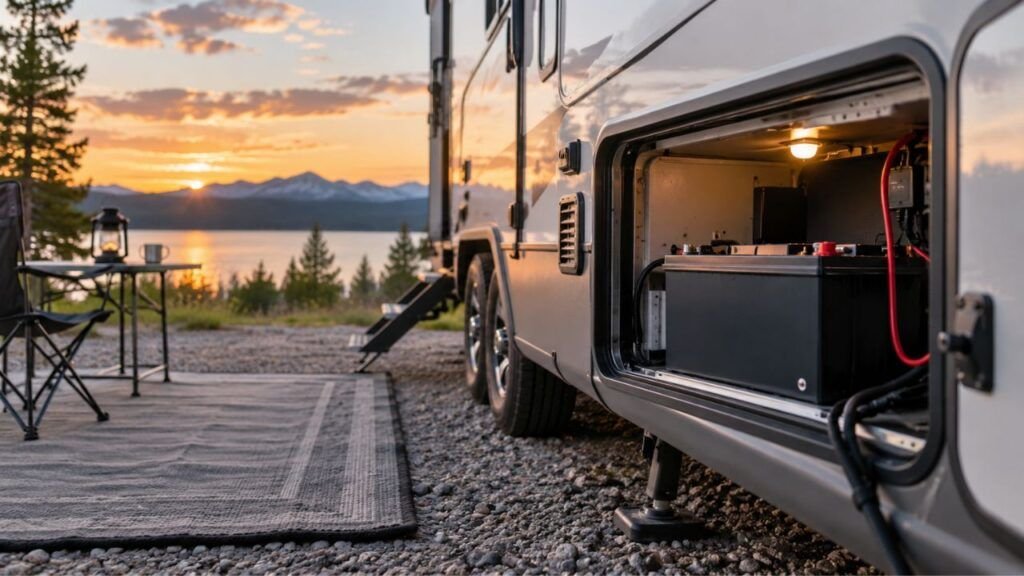
Yes, you can use a lithium battery in winter without a built-in heater. A standard LiFePO4 battery can usually discharge in freezing weather, but you must prevent charging when the battery is below its manufacturer-specified minimum charging temperature.
The real challenge is not simply using the battery when it is cold. It is knowing when charging is safe, how the BMS protects the cells, and how to warm an unheated battery when necessary. I’ll walk you through all of that below.
Key Takeaways
- You do not automatically need a heated lithium battery for winter use.
- LiFePO4 batteries can usually discharge at much colder temperatures than they can charge.
- Never charge below the minimum temperature specified by your battery manufacturer.
- Many batteries use a BMS to block unsafe cold-weather charging.
- Low-temperature BMS protection does not actually warm the battery.
- Battery cell temperature matters more than the outdoor air temperature.
- Insulation slows heat loss but cannot warm an already-cold battery.
- Heated batteries make the most sense when frequent winter charging is unavoidable.
Can You Use a Lithium Battery in Winter Without a Built-In Heater?
Yes. An unheated LiFePO4 battery can work perfectly well through winter if you manage its temperature correctly.
This is especially true when the battery sits inside an RV, camper van, cabin, garage, or other area that stays warmer than the outside air.
The key difference is between using power and putting power back into the battery.
A lithium battery may continue powering lights, pumps, an inverter, electronics, or other equipment even when temperatures fall below freezing.
Charging is different.
Cold LiFePO4 cells cannot always accept charging current safely. If your battery reaches its minimum charging temperature, charging needs to stop until the cells warm again.
That means a built-in heater is more about maintaining reliable winter charging than simply allowing the battery to exist or operate in cold weather.
Throughout this guide, I am mainly talking about LiFePO4 deep-cycle batteries commonly used in RVs, boats, solar systems, camper vans, and backup power systems.
What Happens to an Unheated Lithium Battery in Cold Weather?
Cold weather changes how quickly chemical reactions happen inside lithium cells. You may notice reduced runtime or weaker performance, but charging deserves the most attention.
Discharging Usually Remains Possible
Most LiFePO4 batteries can discharge below freezing.
Exactly how cold depends on the battery manufacturer and cell design. Some models are rated for discharge at temperatures far below 32°F.
You may still notice reduced performance.
The battery’s internal resistance increases as temperatures fall. That can cause more voltage sag when you run demanding equipment.
You may also get less usable capacity than you would during warmer weather.
For example, a battery that normally runs your equipment throughout the day may provide noticeably shorter runtime during a very cold winter morning.
That does not necessarily mean something is wrong with the battery.
Charging Is the Bigger Winter Concern
Charging a cold lithium battery is much more restrictive than discharging it.
During charging, lithium ions need to move through the electrolyte and enter the battery’s anode.
Low temperatures slow that process.
If charging current enters the cells faster than the cold anode can properly accept it, lithium can begin depositing on the surface instead.
This is known as lithium plating.
Unlike temporary cold-weather capacity loss, lithium plating can create permanent damage.
That is why you should never bypass low-temperature charging protection simply because the battery refuses to charge.
Cold Capacity Loss Is Often Temporary
Cold temperatures can temporarily make a lithium battery appear weaker than normal.
You might notice:
- Shorter runtime.
- Lower available capacity.
- Greater voltage drop under heavy loads.
- Earlier low-voltage protection.
- Reduced peak power.
Once the battery warms, much of that cold-related performance can return.
This is different from damage caused by repeatedly charging the cells below their permitted temperature.
Cold operation itself and unsafe cold charging are not the same thing.
How Cold Is Too Cold for a Lithium Battery?
There is no single temperature number that applies to every lithium battery. The safest approach is always to follow the charging and discharging limits listed by your battery manufacturer.
| Battery Condition | What Usually Happens | What You Should Do |
| Above minimum charging temperature | Normal charging is generally allowed | Charge according to manufacturer specifications |
| Near minimum charging temperature | Some batteries may reduce or block charging | Check battery temperature and BMS status |
| Below minimum charging temperature | Charging may be blocked by the BMS | Stop charging and warm the battery |
| Below freezing but above discharge limit | Battery may still power equipment | Expect some reduced capacity and voltage |
| Below minimum discharge temperature | BMS may disconnect output | Warm the battery before continued use |
| Cold battery moved indoors | Outside case may warm before internal cells | Allow enough time for the entire battery to warm |
You will often hear 32°F mentioned as the cold-charging limit for LiFePO4 batteries.
That is a useful general reference, but it should not replace the specifications for your particular battery.
Some manufacturers permit charging at temperatures slightly below freezing. Others require the cells to be several degrees above freezing.
So rather than memorizing one number, check your battery manual.
The internal battery temperature is what really matters.
Your weather app might show 35°F while the battery itself is still colder after sitting outside overnight.
The opposite can also happen inside an insulated compartment.
Does the BMS Protect a Lithium Battery Without a Heater?
Many modern lithium batteries include low-temperature charging protection through their Battery Management System. However, protection and heating are two different functions.
What Low-Temperature Charge Protection Does
A Battery Management System monitors important conditions inside your battery.
Depending on the design, this may include:
- Cell voltage.
- Current.
- High temperature.
- Low temperature.
- Overcharging.
- Excessive discharge.
- Short circuits.
If the internal temperature falls below the battery’s permitted charging range, a temperature sensor can tell the BMS to disconnect the charging path.
Charging remains blocked until the battery warms above its recovery temperature.
This can protect the battery even if solar panels, a converter, or another charger is still connected.
What the BMS Does Not Do
A standard BMS usually cannot warm an unheated battery.
It simply prevents unsafe charging.
That means your battery might sit at 20°F while solar power is available, yet remain unable to recharge until the cells warm.
A BMS also does not eliminate cold-weather capacity loss.
You can still experience reduced performance while discharging in very low temperatures.
Not Every Lithium Battery Has Low-Temperature Protection
This is something I would check before relying on any lithium battery through winter.
Having a BMS does not automatically mean the BMS includes low-temperature charging protection.
Look at your battery’s specification sheet or manual and check for terms such as:
- Low-temperature charge cutoff.
- Low-temperature protection.
- Charging temperature range.
- Charge recovery temperature.
- Cold-charge protection.
Bluetooth-enabled batteries sometimes show the temperature and protection status directly through an app.
If your battery does not provide low-temperature charge protection, you need another reliable way to prevent charging when it becomes too cold.
How to Use a Lithium Battery Without a Heater During Winter
You can safely manage an unheated lithium battery through winter with a few basic habits.
- Check the battery temperature specifications. Find the minimum charging and discharging temperatures listed by the manufacturer.
- Confirm low-temperature BMS protection. Do not assume the battery has this feature simply because it includes a BMS.
- Monitor battery temperature. Use the battery’s Bluetooth app or an appropriate temperature sensor when available.
- Prevent charging when the battery is too cold. This includes solar, alternator, converter, generator, and shore-power charging.
- Warm the battery when necessary. Move it somewhere warmer or use an appropriate controlled battery heating system.
- Give the internal cells time to warm. A warm battery case does not guarantee the center cells have reached the same temperature.
- Resume charging only after reaching the permitted temperature. Let your BMS reconnect automatically when possible.
- Keep an eye on the first charging cycle. This is especially useful after an unusually cold night.
Once this becomes part of your winter routine, using an unheated lithium battery is usually straightforward.
How Can You Keep an Unheated Lithium Battery Warm?
You have several options besides buying a battery with a factory-installed heater. The right choice depends mainly on where your battery is installed and how often you deal with freezing temperatures.
Install the Battery Inside a Heated Space
This is often the simplest solution.
Many RVers install LiFePO4 batteries inside a storage compartment that receives some heat from the living area.
Others place them beneath a dinette, inside an interior cabinet, or in another protected compartment where temperatures remain above freezing.
Home backup and solar batteries may also sit inside conditioned utility spaces.
If the battery never becomes cold enough to block charging, a built-in heater provides very little benefit.
You still need to follow the manufacturer’s installation requirements, including ventilation, clearances, wiring protection, and mounting instructions.
Use an Insulated Battery Box
Insulation can make a big difference.
It slows the rate at which heat leaves the battery and helps protect it from rapid temperature changes.
An insulated battery compartment can be particularly useful when daytime temperatures climb above freezing but overnight temperatures occasionally drop below it.
However, insulation does not create heat.
If the battery sits in a freezing compartment for long enough, the internal cells will eventually become cold too.
Think of insulation as something that holds existing warmth rather than produces new warmth.
Use a Thermostat-Controlled External Battery Heater
A properly designed battery heating pad or heating blanket can warm an existing non-heated battery.
I prefer a system with temperature control instead of a heater that runs continuously.
A thermostat can activate the heater when temperatures fall and turn it off when the battery becomes warm enough.
This reduces wasted energy and helps prevent excessive heating.
Make sure the heater is suitable for your battery type and installation.
Avoid improvised heating elements or extremely hot surfaces placed directly against the battery case.
Warm a Removable Battery Indoors
This approach works well with portable batteries, trolling motor batteries, and smaller seasonal systems.
If the battery becomes too cold to charge, disconnect it according to the manufacturer’s instructions and bring it somewhere warmer.
Give it time to warm before reconnecting the charger.
Do not assume that bringing a frozen battery into a warm room makes it instantly ready for charging.
The battery case may warm before the internal cells do.
How Long Should You Warm a Lithium Battery Before Charging?
There is no reliable universal warm-up time.
One battery might become warm enough relatively quickly, while a larger battery sitting deeply below freezing could take much longer.
Warm-up time depends on:
- Battery capacity.
- Battery size and weight.
- Starting temperature.
- Room temperature.
- Battery insulation.
- Heating pad wattage.
- Air movement around the battery.
The better approach is to use temperature rather than time.
If your battery’s Bluetooth app displays its internal temperature, wait until it rises above the manufacturer’s minimum charging temperature.
If you cannot see internal temperature, follow the manufacturer’s warming recommendations and allow enough time for the entire battery to stabilize.
I would rather wait longer than start charging simply because the outside of the case feels warm.
Can You Charge an Unheated Lithium Battery Below Freezing?
You should not charge a standard LiFePO4 battery below its manufacturer’s specified charging temperature.
For many batteries, that means charging stops somewhere around the freezing point.
However, exact limits vary.
Some specialized batteries may allow limited charging at colder temperatures. Others require temperatures several degrees above freezing.
That is why I would not apply the same 32°F cutoff to every battery.
Also be careful with the common advice to simply reduce the charging current.
Charging more slowly may reduce stress under some circumstances, but it does not automatically make cold charging safe for a battery whose manufacturer prohibits it.
Follow the battery’s approved charging range.
What Happens If You Try to Charge a Frozen Lithium Battery?
A lithium battery may still appear completely normal while it is too cold for safe charging. The damage happens inside the cells, which makes cold charging particularly easy to underestimate.
Lithium Plating Can Form
Normally, lithium ions move into the anode during charging.
When the cell becomes too cold, that process slows significantly.
Metallic lithium can then begin depositing on the anode’s surface instead of being stored normally.
This is lithium plating.
Capacity Can Permanently Decline
Lithium plating removes some lithium from normal operation.
Over time, that can reduce how much usable energy the battery stores.
Repeated cold charging may therefore shorten the battery’s useful life.
Unlike temporary winter capacity loss, this damage may not disappear when temperatures rise.
Internal Resistance Can Increase
Battery degradation can also affect how efficiently electricity moves through the cells.
Higher internal resistance can contribute to:
- Greater voltage sag.
- More heat under load.
- Reduced efficiency.
- Lower available power.
Safety Risk Can Increase
Cold charging does not mean your battery will immediately catch fire or fail catastrophically.
However, lithium plating is undesirable because it can contribute to internal cell damage and potentially increase failure risk.
That is one reason good lithium batteries include temperature monitoring and protective controls.
What Happens When Solar Starts Charging a Frozen Battery?
Solar charging creates a special winter problem because the charging source can turn on automatically. A battery might spend the entire night below freezing while the solar panels begin producing power shortly after sunrise.
Battery With Low-Temperature BMS Protection
If the battery includes properly functioning low-temperature charging protection, the BMS should prevent current from entering the cells while they are too cold.
Your solar charge controller may be operating normally, yet the battery still refuses to accept charging current.
That is usually protection doing its job.
Once the cells warm enough, the BMS can allow charging again.
Battery Without Low-Temperature Charge Protection
You need another dependable temperature-control strategy if your battery does not protect itself.
Depending on your equipment, that may include:
- Charge-controller temperature limits.
- An external battery temperature sensor.
- Automated charging disconnects.
- A thermostat-controlled battery heater.
- Manually disabling charging.
- Moving the battery into a warmer space.
The important thing is preventing automatic solar charging before the battery reaches its safe range.
Why Insulation Helps but Does Not Solve Everything
Insulating a battery compartment can help it retain heat from the previous day.
This may keep the battery above its charging cutoff during short overnight freezes.
But after several hours or days of severe cold, an insulated battery can still reach the surrounding temperature.
For regular winter solar use, insulation works best alongside a heat source or temperature-controlled charging system.
What About Alternator, Shore Power, and Generator Charging?
Solar gets a lot of attention, but it is not the only charging source that can automatically send current toward a cold battery. RV and off-grid systems may have several possible charging sources.
Alternator or DC-to-DC Charging
Imagine spending the night at a cold campsite.
Your battery bank is below its charging limit in the morning.
You start the truck and drive away.
A DC-to-DC charger may immediately try to recharge the house batteries from the alternator.
The charging source is working normally, but the battery may still be too cold.
Low-temperature BMS protection or a properly configured DC-to-DC charger should prevent unsafe charging.
RV Shore Power and Converter Charging
The same issue occurs when plugging your RV into shore power.
Your converter may automatically begin charging the house battery.
Before connecting shore power after a very cold night, make sure the battery is within its allowed charging range or protected by an appropriate BMS.
You should not assume shore power is automatically safe simply because the charger is indoors.
Generator Charging
A generator creates another strong charging source.
Again, what matters is not whether the generator is warm.
It is whether the battery cells are warm enough.
If you start your generator on a freezing morning, make sure the charging system cannot force current into a battery that remains below its charging cutoff.
Built-In Heater vs External Heater vs No Heater
There is no single best winter battery setup. The right option depends on where your battery lives, how often you charge below freezing, and how much manual management you want.
| Setup | Built-In Heater | External Heater | No Heater |
| Battery inside heated RV or cabin | Usually unnecessary | Usually unnecessary | Often practical |
| Occasional overnight freeze | Optional | Helpful when needed | Often workable |
| Exterior RV compartment | Very convenient | Practical option | Requires careful charging |
| Frequent winter boondocking | Strong choice | Can work well | Less convenient |
| Winter solar system | Strong choice | Good with temperature control | Needs reliable charge cutoff |
| Remote unattended system | Often preferable | Requires automation | Usually inconvenient |
| Removable trolling motor battery | Optional | Usually unnecessary | Indoor warming works well |
| Mild southern U.S. winters | Usually unnecessary | Usually unnecessary | Often sufficient |
A built-in heater mainly adds convenience.
Instead of manually checking temperature or warming the battery, the battery manages much of the process automatically.
An external heater can offer similar benefits when it is installed correctly.
Using no heater at all can still work very well when the battery stays inside a reasonably warm environment.
When Is a Built-In Heater Actually Worth It?
A self-heating battery starts making much more sense when freezing temperatures are part of your normal routine.
Consider one when:
- Your battery sits inside an exterior RV compartment.
- Winter temperatures regularly remain below freezing.
- You frequently boondock in mountain or northern climates.
- Solar needs to recharge your batteries automatically each morning.
- Your battery bank is difficult to access.
- You cannot easily move the battery somewhere warm.
- The power system operates unattended.
- Reliable winter charging matters more than saving on battery cost.
- You regularly rely on the battery during extended cold spells.
A heated battery can remove much of the daily temperature management from the equation.
That convenience becomes valuable if you regularly camp, travel, or live off-grid through cold winters.
When Can You Skip the Built-In Heater?
Plenty of lithium battery users do not need one.
A standard non-heated LiFePO4 battery may be completely suitable when:
- The battery sits inside a heated RV.
- Your camper van battery bank is within the living area.
- Your climate only experiences occasional freezing nights.
- You can delay charging until later in the day.
- The battery is easy to bring indoors.
- You already use a controlled external heater.
- Your battery has reliable low-temperature protection.
- Winter charging is infrequent.
- The compartment stays above the battery’s charging limit.
I would not replace a perfectly good non-heated battery simply because temperatures occasionally drop below 32°F.
Look at what the battery itself experiences, not just the winter weather outside.
Common Winter Mistakes With Unheated Lithium Batteries
Most cold-weather battery problems come from charging decisions rather than simply exposing the battery to cold air.
Watch out for these common mistakes:
- Assuming 32°F is the exact cutoff for every lithium battery.
- Looking only at outside temperature instead of battery temperature.
- Assuming every BMS includes cold-charge protection.
- Trying to bypass the BMS because the battery refuses to charge.
- Assuming insulation can warm a battery.
- Plugging into shore power before checking battery temperature.
- Letting solar charge automatically without low-temperature protection.
- Using an uncontrolled heating pad.
- Assuming charge and discharge temperature limits are the same.
- Ignoring the manufacturer’s charging specifications.
- Charging immediately after bringing a freezing battery indoors.
- Assuming a battery rated to operate below zero can also charge there.
That last mistake is particularly common.
Always check whether a cold-temperature specification refers to charging, discharging, or storage.
Winter Use by Application
The same cold-weather rules apply across lithium battery systems, but how you manage them changes depending on where and how the battery is installed.
RVs and Travel Trailers
Battery placement matters enormously in an RV.
A lithium battery mounted inside a heated storage bay may never become cold enough to stop charging.
One sitting on the trailer tongue can experience completely different temperatures.
Pay particular attention to shore power, converters, solar controllers, and tow-vehicle charging after cold nights.
Camper Vans and Boondocking
Camper vans often have an advantage because the battery bank is installed inside the living area.
If you heat the van overnight, the battery may remain comfortably above its charging cutoff.
Winter boondockers should pay extra attention to morning solar charging.
Cold batteries and automatic sunrise charging can be a bad combination without temperature protection.
Boats and Trolling Motors
A trolling motor battery may still provide power during cold-weather fishing trips, depending on its discharge specifications.
Charging afterward is another matter.
If your battery is removable, bringing it somewhere warm before charging can be easier than installing a permanent heating system.
Off-Grid Solar and Cabins
Cold-weather solar systems need more automation because nobody may be present to check battery temperature every morning.
A self-heating battery, battery heater, or temperature-controlled charging system becomes much more valuable here.
Also remember that winter brings shorter solar days.
Using some solar energy to warm batteries reduces how much remains available for actual charging.
Home Backup Systems
Indoor home backup batteries may rarely experience freezing conditions.
A battery inside a conditioned utility room or heated garage probably does not need a built-in heater.
A battery bank installed inside a detached shed or other unheated structure deserves more attention.
Installation temperature is often more important than the outdoor climate alone.
Does Winter Weather Permanently Damage a Lithium Battery?
Cold weather does not automatically permanently damage a LiFePO4 battery.
A cold battery may temporarily deliver less capacity and experience more voltage sag.
Its performance often improves again after warming.
The bigger concern is charging outside the approved temperature range.
Repeated cold charging can contribute to lithium plating and permanent cell degradation.
So there is an important difference between these two statements:
“My battery is cold.”
and
“I am charging my battery while it is too cold.”
The second situation deserves much more caution.
Should You Replace an Existing Non-Heated Lithium Battery?
Probably not simply because winter is approaching.
Before replacing a good battery, ask yourself:
Where is it installed?
How cold does the actual battery become?
Does the BMS stop charging at low temperatures?
Do you regularly need to charge while temperatures remain below freezing?
Can you insulate the compartment?
Could you add a controlled external heater?
Can you delay charging for several hours?
Is the battery easy to bring indoors?
If your existing battery stays warm enough or reliably blocks charging until conditions improve, there may be little reason to replace it.
A heated model becomes more attractive when managing the existing battery starts interfering with how you actually use your RV, boat, solar system, or backup setup.
Final Verdict
Yes, you can use a lithium battery in winter without a built-in heater.
The important part is preventing the battery from charging below its manufacturer-approved temperature. Discharging can usually continue at considerably colder temperatures, although available capacity and power may decrease.
If your battery lives inside a heated RV, cabin, home, or protected compartment, a built-in heater may provide very little benefit. If the battery regularly sits outside in freezing temperatures and must recharge automatically, heating becomes much more useful.
Above all, follow your battery’s actual temperature specifications instead of relying on a universal 32°F rule.
Related FAQs
Here are a few common questions that come up when using standard LiFePO4 batteries during cold winter weather.
Can LiFePO4 Batteries Be Used Below 32°F?
Yes. Many LiFePO4 batteries can continue discharging below 32°F, although available capacity and power may decrease. The minimum permitted discharge temperature varies by manufacturer, so always check your battery specifications.
Can You Discharge a Lithium Battery Below Freezing?
Usually, yes. LiFePO4 batteries generally allow discharge at temperatures considerably colder than their minimum charging temperature. Expect reduced capacity and greater voltage sag as temperatures continue falling.
Can You Charge a Lithium Battery at 30°F?
It depends on the battery. Many LiFePO4 batteries prohibit charging around or below freezing, while some manufacturers specify slightly different limits. Follow the minimum charging temperature listed for your specific battery.
Does a Lithium Battery BMS Stop Charging When It Is Too Cold?
A BMS with low-temperature charge protection can stop charging when internal battery temperature falls below its programmed limit. However, not every lithium battery includes this feature, so check the specifications rather than assuming it does.
Do All LiFePO4 Batteries Have Low-Temperature Protection?
No. Most quality modern batteries include a BMS, but low-temperature charging protection is not guaranteed on every model. Verify that feature before depending on the battery during freezing weather.
Can You Put a Heating Pad Under a Lithium Battery?
Yes, if the heating pad is suitable for lithium battery use and installed according to the battery and heater manufacturers’ instructions. A thermostat-controlled heater is preferable because it can prevent unnecessary or excessive heating.
Will an Insulated Battery Box Keep a Lithium Battery Above Freezing?
An insulated box can slow heat loss, but it cannot generate heat. A battery left in prolonged freezing temperatures can eventually reach the surrounding temperature even inside an insulated enclosure.
Can Solar Panels Charge a Lithium Battery in Freezing Weather?
Solar panels can produce power in freezing weather, but a cold lithium battery may not be able to accept that charge. Low-temperature BMS protection, temperature-controlled charging, or battery heating may be necessary.
How Long Does a Lithium Battery Take to Warm Up?
There is no fixed warm-up time. Battery size, starting temperature, room temperature, insulation, and heater output all affect the process. Use internal battery temperature rather than a specific number of minutes whenever possible.
Can You Bring a Frozen Lithium Battery Indoors and Charge It?
Yes, but allow the battery’s internal cells to warm above the manufacturer’s minimum charging temperature first. Do not begin charging simply because the outer battery case feels warm.
Is a Self-Heating Lithium Battery Worth It for an RV?
A self-heating battery can be worthwhile if you frequently winter camp, keep batteries in an exterior compartment, or need automatic solar or alternator charging below freezing. It may be unnecessary when batteries remain inside a heated RV.
Can You Leave LiFePO4 Batteries in an RV Over Winter?
Usually, yes, provided the batteries remain within their manufacturer’s storage temperature range, are protected from parasitic drain, and are not charged below their minimum charging temperature. Follow the manufacturer’s winter storage recommendations for your specific model.

Ryan Carter writes practical battery guides focused on troubleshooting, everyday use, and smarter buying decisions. His experience with lithium batteries, RV and automotive power, and home backup systems helps readers choose reliable solutions with confidence.