
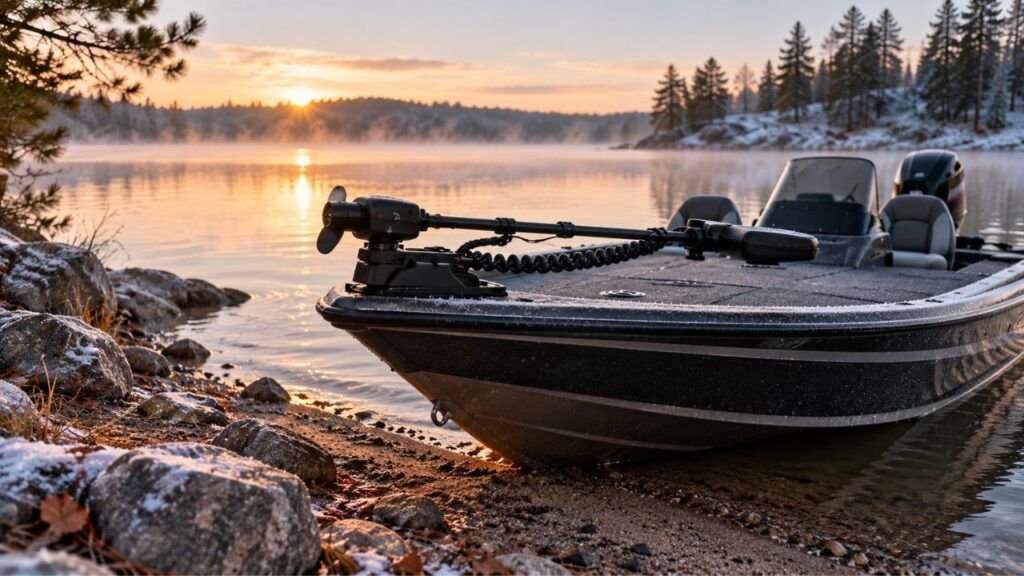
A heated lithium battery is usually better for a trolling motor if you regularly charge in freezing conditions. A non-heated lithium battery makes more sense for warm-weather fishing, heated storage, or anglers who can bring their battery indoors before charging.
The main difference isn’t how much trolling power you get. It’s how easily you can recharge safely when the battery gets cold. I’ll walk you through cold-weather charging, onboard chargers, storage, 24V and 36V systems, costs, and which option fits your fishing routine.
Key Takeaways
- Heated batteries are mainly designed to make cold-weather charging easier.
- Many LiFePO4 batteries can discharge below freezing within their rated limits.
- Charging below the battery’s safe temperature can permanently damage its cells.
- Low-temperature protection stops charging but doesn’t warm the battery.
- Self-heating batteries warm their cells before normal charging starts.
- You probably don’t need heating if you always charge indoors.
- Outdoor boat storage makes a heated battery much more useful.
- Always follow your battery manufacturer’s exact temperature limits.
Heated vs Non-Heated Lithium Trolling Motor Battery: Quick Comparison
Both battery types can run a trolling motor very well. The important differences appear when cold weather affects charging, storage, and your normal fishing routine.
| Feature | Heated Lithium Battery | Non-Heated Lithium Battery |
| Built-in heater | Yes | No |
| Cold-weather trolling use | Usually supported within rated limits | Usually supported within rated limits |
| Charging below safe temperature | Warms cells first on compatible designs | BMS may block charging |
| Low-temperature protection | Usually included | Often included on quality models |
| User involvement | Minimal | May require manual warming |
| Outdoor winter storage | More convenient | Requires more planning |
| Onboard charging after cold trips | Easier | Charging may remain blocked |
| Heater energy use | Yes | None |
| Purchase price | Usually higher | Usually lower |
| Best for | Frequent freezing conditions | Mild climates or indoor charging |
The exact temperature limits still depend on the battery. Never assume every heated or non-heated model behaves identically.
What Does “Heated” Mean on a Lithium Trolling Motor Battery?
A heated trolling motor battery contains more than ordinary LiFePO4 cells. It normally combines temperature sensors, heating elements, and BMS controls to manage cold charging automatically.
Heated Lithium Battery
A heated lithium battery contains internal heating pads or elements. These elements raise the internal cell temperature before charging begins.
The battery’s BMS monitors temperature while the charger is connected. If the cells are too cold, the system can send incoming energy toward the heaters instead.
Normal charging begins once the cells reach the required temperature.
The exact process varies between manufacturers. Some batteries activate heating near freezing. Others use different start and stop temperatures.
The heater usually isn’t there to warm your battery continuously. Its main purpose is preparing cold cells for safe charging.
Non-Heated Lithium Battery
A non-heated LiFePO4 battery simply lacks built-in heating elements.
That doesn’t mean it lacks cold-weather protection.
Many quality non-heated trolling motor batteries include temperature sensors and low-temperature charging protection. Their BMS can stop incoming charging current when the cells become too cold.
Once the battery warms sufficiently, charging may automatically resume.
This makes a protected non-heated battery perfectly practical for many anglers.
Low-Temperature Protection Is Not Self-Heating
These two features are often confused, but they do different jobs.
Low-temperature protection basically tells the charger:
“I’m too cold. Don’t charge me yet.”
Self-heating works more like:
“I’m too cold. Warm me first, then start charging.”
Both approaches can protect the battery.
The difference is convenience.
With low-temperature cutoff alone, you must wait for warmer conditions. You might also bring the battery indoors to warm it.
With self-heating, the battery can handle much of that process automatically.
Why Freezing Temperatures Matter More During Charging Than Trolling
Cold weather doesn’t affect every battery operation equally. For LiFePO4 trolling motor batteries, charging is usually the bigger concern.
Using the Trolling Motor in Cold Weather
A cold lithium battery can often still power your trolling motor.
Many LiFePO4 batteries have discharge temperature limits well below freezing. However, available capacity and performance can decline as temperatures become extremely low.
Suppose you launch your boat on a 25°F morning. That doesn’t automatically mean your battery cannot operate.
If 25°F remains inside the battery’s approved discharge range, you can normally use it.
You should still check your model’s specifications.
Some batteries permit colder operation than others.
Charging the Battery Below Freezing
Charging is different.
LiFePO4 cells have more difficulty accepting charge at very low temperatures. Charging them improperly when cold can cause metallic lithium to deposit where it shouldn’t.
This process is commonly called lithium plating.
Possible consequences include:
- Permanent capacity loss
- Increased internal resistance
- Shorter battery lifespan
- Reduced charging performance
- More serious internal cell damage in severe cases
That’s why quality lithium batteries often include low-temperature charging protection.
The important point isn’t simply “lithium batteries hate cold.”
A more useful rule is:
Cold discharging may be acceptable, while cold charging can require protection.
Also remember that 32°F isn’t a universal limit for every battery. Some manufacturers specify slightly higher or lower thresholds.
Always use the charging range printed for your specific model.
Does a Heated Battery Make a Trolling Motor Run Better in Cold Weather?
Usually, no.
A heated battery doesn’t automatically make your trolling motor produce more thrust.
Imagine two equivalent 100Ah LiFePO4 batteries. One has internal heating, while the other doesn’t.
If both batteries are already within their normal operating range, their trolling motor performance can be very similar.
The heater becomes valuable when it’s time to recharge.
This difference matters most after cold fishing trips.
Suppose your boat sits outside overnight during early spring. The batteries become thoroughly cold before the morning trip.
You fish several hours and return with reduced battery capacity.
A heated battery can often begin warming itself once you connect the proper charger.
A protected non-heated battery may simply reject charging until it warms.
So you’re mainly paying for cold-weather charging convenience, not extra trolling motor power.
How a Self-Heated Trolling Motor Battery Charges After a Freezing Trip
Self-heating systems vary between brands, but the basic process is often similar. Understanding it helps you see where the extra cost actually helps.
- You return with a cold battery.
The battery may have spent hours exposed to freezing conditions. - You connect your onboard or external charger.
The battery receives charging power from the connected source. - The BMS checks internal temperature.
Sensors determine whether the cells are warm enough for charging. - The heater activates if necessary.
Available power is directed toward warming the battery cells. - Normal charging starts after warming.
Once the required temperature is reached, charging proceeds normally.
The exact activation temperature can vary.
Heating time can also depend on starting temperature, battery size, heater power, and available charging current.
That’s why you shouldn’t assume every self-heating battery works with every small charger.
Internal Battery Temperature Matters More Than the Weather App
Outside temperature gives you useful information, but it doesn’t tell you exactly how warm your battery cells are.
Imagine your boat spent the entire night outside at 18°F.
By noon, your phone shows an air temperature of 36°F.
That doesn’t necessarily mean your battery cells are already 36°F.
A large battery can remain cold after the surrounding air starts warming.
The opposite can happen too.
A battery mounted inside an enclosed compartment may remain warmer than outside air. An insulated battery box can also slow temperature changes.
For charging decisions, the battery’s internal temperature matters most.
Fortunately, a good BMS measures the battery itself rather than relying on your weather forecast.
That protection is especially valuable for anglers who leave batteries installed permanently.
When a Heated Lithium Battery Is Worth It for a Trolling Motor
A heated battery isn’t automatically the best choice for every boat. It becomes valuable when your normal fishing habits regularly expose the battery to cold charging conditions.
You Fish During Early Spring or Late Fall
Northern anglers often face freezing temperatures outside the traditional winter season.
You might launch during a 28°F morning even though afternoon temperatures reach 50°F.
That creates unpredictable battery temperatures between trips.
If you frequently fish during these shoulder seasons, self-heating becomes useful.
Your Boat and Batteries Stay Outside Overnight
Outdoor storage is one of the strongest reasons to consider heating.
A battery left outside long enough eventually approaches surrounding temperatures.
That means your battery could be thoroughly cold when you connect the charger.
A heated battery gives you more flexibility without removing it every trip.
You Keep the Batteries Installed With an Onboard Charger
This is where heating becomes particularly convenient.
Many anglers prefer arriving home, parking the boat, and connecting shore power.
You probably don’t want to remove heavy batteries after every fishing trip.
When your batteries stay installed, self-heating can simplify freezing-weather charging.
You Regularly Fish in Subfreezing Conditions
Occasional cold weather doesn’t necessarily justify paying extra for heating.
Regular freezing conditions are different.
If cold mornings are normal throughout your fishing season, heating becomes easier to justify.
That applies especially to anglers in northern states and higher elevations.
You Want Less Hands-On Battery Management
Some anglers don’t mind checking battery temperatures or moving batteries indoors.
Others want the system to manage itself.
If convenience matters strongly, a properly designed heated battery reduces manual steps.
When a Non-Heated Lithium Battery Makes More Sense
You don’t need to pay for a feature that your fishing routine rarely uses. A quality non-heated battery is often the better-value choice when freezing charging is easy to avoid.
A non-heated model makes sense when:
- You mostly fish between late spring and early fall.
- Your normal charging temperatures remain comfortably above freezing.
- The boat stays inside a heated garage.
- You remove the battery and charge it indoors.
- Freezing weather happens only occasionally.
- You don’t mind waiting for a cold battery to warm.
- Lower upfront cost matters more than automatic heating.
For many anglers, a non-heated battery with low-temperature charge protection offers an excellent middle ground.
The BMS protects the cells without making you pay for internal heating.
Heated vs Non-Heated Batteries for Different Fishing Situations
Climate alone shouldn’t decide your purchase. Your storage location and charging habits often matter just as much.
| Fishing or Storage Situation | Better Choice | Main Reason |
| Summer fishing only | Non-heated | Heating provides little practical benefit |
| Warm southern climate | Usually non-heated | Freezing charging is uncommon |
| Northern early-spring fishing | Heated | Easier charging after freezing exposure |
| Heated garage storage | Non-heated | Battery normally stays warm |
| Boat stored outside | Heated | Cold-soaked batteries are more likely |
| Battery removed after each trip | Non-heated | Easy to warm indoors |
| Outdoor onboard charging | Heated | Less manual temperature management |
| Frequent winter fishing | Heated | Regular cold exposure increases usefulness |
| Occasional freezing night | Either | Depends on your willingness to warm manually |
There isn’t one universally correct choice.
Think about where the battery sits before charging, not just where you fish.
What About 24V and 36V Trolling Motor Systems?
Cold-weather charging gets slightly more complicated when multiple batteries create a higher-voltage trolling motor bank. Each battery can have its own BMS and temperature conditions.
Multiple 12V Batteries in Series
A 24V trolling motor commonly uses two 12V batteries in series.
A 36V motor may use three.
Each lithium battery still has its own BMS.
Imagine one battery sits against an outside compartment wall. Another sits deeper inside the compartment.
One battery could become colder than the other.
If one BMS blocks charging because of temperature, the system may not charge as expected.
This is one reason matched batteries are important.
Use the same model, capacity, chemistry, BMS rating, and ideally similar age.
Single 24V or 36V Lithium Battery
A dedicated 24V or 36V lithium battery can simplify wiring.
Instead of several individual batteries, one unit supplies the required trolling motor voltage.
That doesn’t eliminate cold-temperature concerns.
The battery still needs appropriate charging protection or internal heating.
Check the same specifications you would check with a 12V model.
Should You Mix Heated and Non-Heated Batteries?
I wouldn’t mix heated and non-heated batteries within the same series bank unless the manufacturer specifically approves it.
Their BMS behavior may differ during charging.
Heating activation can also create different battery conditions across the bank.
For a multi-battery system, consistency makes troubleshooting much easier.
Matched batteries also help keep charging and discharging behavior more predictable.
Does Your Trolling Motor Charger Work With a Heated Lithium Battery?
A heated battery still needs the right charging system. The heating feature doesn’t make an incompatible charger suddenly suitable for LiFePO4.
Check for a Lithium Charging Profile
Use a charger designed for your battery chemistry.
LiFePO4 batteries generally use a different charging profile from traditional flooded or AGM batteries.
Some modern marine chargers include selectable lithium modes.
Others may be designed only for lead-acid batteries.
Don’t choose solely by voltage.
Check whether the charger manufacturer specifically supports LiFePO4 charging.
Check Your Onboard Marine Charger
Onboard charging is extremely convenient for trolling motor batteries.
However, compatibility should be checked before installing a heated model.
Verify:
- Supported battery chemistry
- Number of charging banks
- Voltage per bank
- Charging current per bank
- Maximum charging voltage
- Battery manufacturer’s charger requirements
A charger working correctly with one lithium battery doesn’t automatically work with every heated model.
Check the Minimum Current Needed for Heating
This point is easy to miss.
Some self-heating batteries require a certain amount of incoming current before their heaters activate properly.
A very low-amp charger might not provide enough power.
That’s particularly important when using maintainers or small portable chargers.
Check both the battery specifications and charger output.
Don’t assume plugging in any lithium charger guarantees self-heating.
Will Self-Heating Drain the Trolling Motor Battery?
Heating requires energy, but where that energy comes from depends on the battery design.
Some self-heating batteries primarily use incoming charger power.
The charger warms the cells first. Charging begins afterward.
Other systems can handle heating differently.
Because designs vary, I wouldn’t assume every heated battery behaves exactly the same.
One thing remains consistent.
Energy used for heating isn’t simultaneously going into stored battery capacity.
That means extremely cold batteries may take longer to complete charging.
The delay isn’t necessarily a problem.
It simply means the battery must become warm enough before charging normally.
If heater power consumption matters to you, check the manufacturer’s specifications carefully.
How Long Does a Heated Lithium Battery Take to Warm Up?
There’s no single warm-up time that applies to every battery.
A mildly cold battery can warm much faster than one that’s been sitting outdoors overnight at extremely low temperatures.
Warm-up time depends heavily on:
- Starting internal battery temperature
- Battery capacity
- Number and size of heating elements
- Heater wattage
- Available charger current
- Battery box insulation
- Wind and surrounding temperature
Think in terms of conditions rather than one fixed number.
A battery starting just below freezing may need relatively little heating.
A deeply cold-soaked battery could need considerably longer.
If you’re planning an early departure, charge the battery with enough time available.
Don’t assume connecting shore power immediately means full charging starts immediately.
Heated Battery vs External Battery Heater: Which Is Better?
Both approaches aim to solve a similar problem, but their control and convenience can be very different. For most boat owners facing frequent freezing conditions, integrated heating is easier to manage.
Built-In Self-Heating
A heated lithium battery integrates temperature management inside the battery.
Its main advantages include:
- Internal temperature sensing
- Automatic BMS control
- Heating designed around the battery cells
- Less manual setup
- Cleaner installation
You connect the proper charger, and the battery handles much of the process.
That simplicity is valuable on a fishing boat.
External Battery Heating
External heating can work in some installations, but it requires more care.
Use only equipment intended for battery heating and suitable environments.
Don’t improvise with household heating blankets or uncontrolled heating devices.
Marine compartments introduce moisture, vibration, and electrical safety concerns.
You also don’t want uncontrolled heat applied to one battery area.
Always follow the battery manufacturer’s recommendations.
Which Would I Choose?
For frequent freezing-weather charging, I would favor built-in heating.
The system is designed around its internal temperature sensors and BMS.
For rare freezing events, I wouldn’t necessarily pay extra.
Bringing a removable battery into a suitable warmer environment may be simpler.
Does a Heated Lithium Battery Need Special Installation on a Boat?
The heating feature doesn’t completely change battery installation, but it gives you more specifications to check. Treat the battery as part of the boat’s complete electrical system.
Before installation:
- Secure the battery against movement and vibration.
- Use properly sized marine-grade cables.
- Protect the circuit using required fuses or breakers.
- Keep terminals covered against accidental short circuits.
- Follow the manufacturer’s moisture and ingress limitations.
- Don’t assume every lithium battery is waterproof.
- Verify your onboard charger before connecting it.
- Check heater activation requirements.
- Follow permitted series and parallel configurations.
- Keep connections clean, tight, and protected from corrosion.
Also check your trolling motor manufacturer’s lithium battery guidance.
Battery voltage must match the motor system.
The battery’s continuous discharge rating also needs to handle motor demand.
Heating is useful, but basic electrical compatibility still comes first.
Cost: Is a Heated Trolling Motor Battery Worth Paying More For?
Heated lithium batteries generally cost more because you’re buying additional hardware.
You’re paying for heating elements, sensors, and more complex control systems.
That premium makes sense when it solves a problem you face regularly.
Suppose you fish northern lakes throughout early spring and late fall. Your boat stays outside, and you use an onboard charger after every trip.
Heating could save considerable hassle.
Now consider an angler fishing mostly from May through September.
The boat stays inside a heated garage.
That person may never use the heating feature meaningfully.
In that situation, a non-heated battery could provide the same trolling performance for less money.
Think about value this way:
You’re usually not paying for more trolling motor power. You’re paying for easier cold-weather charging.
Once you look at it that way, the decision becomes much simpler.
How to Choose Between Heated and Non-Heated Lithium for Your Trolling Motor
Don’t choose based only on the word “heated” printed on the product page. Work through your actual fishing and charging conditions first.
1. Check Your Lowest Charging Temperature
Think about the temperature when charging starts.
That’s more important than the warmest temperature during your fishing trip.
If charging regularly happens near or below freezing, heating becomes valuable.
2. Decide Where the Battery Stays Overnight
A battery inside a heated garage faces different conditions from one sitting outside.
Outdoor storage increases the chances of cold-soaked cells.
That makes self-heating more useful.
3. Decide Whether You Remove the Battery
Some anglers remove trolling motor batteries after every trip.
Others leave them installed permanently.
If you already bring the battery indoors, built-in heating may provide little benefit.
4. Look for Low-Temperature BMS Protection
This feature is especially important on non-heated batteries.
It stops the battery from accepting charge when temperatures become unsafe.
Don’t confuse this feature with self-heating.
One blocks charging. The other can prepare the battery for charging.
5. Confirm Charger Compatibility
Check the charging profile, output voltage, and current.
If the battery requires a minimum current for heating, verify that too.
This becomes particularly important with onboard marine chargers.
6. Match Your Trolling Motor Voltage
Use the correct battery voltage for your motor.
A 12V motor needs a compatible 12V system.
A 24V or 36V trolling motor needs the appropriate battery arrangement.
Don’t change system voltage just to gain a heating feature.
7. Match Battery Capacity to Your Fishing Style
Heating doesn’t determine runtime.
Amp-hour capacity does much more to influence how long you can fish.
A 50Ah battery can suit shorter trips.
A 100Ah or larger battery may better suit long days.
Motor size, speed, wind, and current also affect runtime.
8. Check the Continuous Discharge Rating
Your trolling motor may draw substantial current at high speed.
Make sure the BMS can supply the motor’s required current continuously.
A great heater doesn’t compensate for an undersized BMS.
9. Check Marine Construction
Look beyond capacity and heating.
Consider:
- Case construction
- Moisture protection
- Terminal design
- Vibration resistance
- Warranty conditions
- Bluetooth monitoring, if useful
- Manufacturer support
A trolling motor battery lives in a demanding environment.
Marine suitability matters.
10. Read Every Temperature Specification
Don’t look only for one number.
Check:
- Charging temperature
- Discharging temperature
- Storage temperature
- Heating activation temperature
- Heating shutdown temperature
- Low-temperature cutoff
- Charging recovery temperature
Those specifications tell you much more than a simple “heated” label.
Final Verdict
For most anglers, the choice between heated and non-heated lithium batteries comes down to where and when charging happens.
Choose a heated lithium trolling motor battery if you routinely fish during freezing weather, leave batteries installed outside, or depend on onboard charging without bringing the batteries indoors.
Choose a non-heated battery with low-temperature protection if freezing conditions are occasional and you can wait for the battery to warm before charging.
A regular non-heated battery can also be an excellent choice if your fishing and charging stay comfortably above its minimum temperature.
Don’t pay extra for heating simply because winter exists where you live.
Pay for it when freezing battery temperatures regularly interfere with your charging routine.
The easiest question to ask yourself is:
How cold will my battery actually be when I plug in the charger?
If the answer is regularly below its safe charging temperature, heated lithium becomes much easier to justify.
Related FAQs
Do I Need a Heated Lithium Battery for My Trolling Motor?
You need one mainly if you regularly charge your trolling motor battery while its cells are below the manufacturer’s safe charging temperature. Warm-weather anglers usually don’t need internal heating.
Can I Use a Non-Heated Lithium Trolling Motor Battery in Winter?
Yes, provided you stay within its approved discharge limits and don’t charge it below its safe charging temperature. A low-temperature BMS cutoff adds valuable protection.
Can a Lithium Trolling Motor Battery Discharge Below 32°F?
Many LiFePO4 trolling batteries can discharge below 32°F, although their exact limits vary. Cold-weather discharging is normally less restrictive than cold-weather charging.
What Happens If I Charge a Lithium Trolling Motor Battery Below Freezing?
Charging cold LiFePO4 cells outside their approved range can cause lithium plating, capacity loss, and shorter battery life. Quality BMS protection should block unsafe charging.
Will a Heated Lithium Battery Give My Trolling Motor More Thrust?
No. Heating doesn’t inherently increase trolling motor thrust. Its main purpose is bringing cold battery cells into an acceptable temperature range for charging.
Can I Leave a Lithium Trolling Motor Battery in My Boat During Winter?
You may be able to, depending on the battery’s storage temperature rating and manufacturer instructions. Disconnect unnecessary loads and follow the recommended storage state of charge.
Can I Charge a Cold Lithium Battery With an Onboard Charger?
You can connect a compatible charger, but actual charging depends on battery temperature. A heated battery may warm first, while a non-heated protected battery may block charging.
How Long Does a Self-Heated Lithium Battery Take to Warm Up?
Warm-up time varies with battery temperature, capacity, heater output, charger current, and installation conditions. A deeply cold battery will usually require longer than one slightly below freezing.
Does a Heated Lithium Battery Use Its Own Power to Stay Warm?
It depends on the battery design. Some systems mainly use incoming charger power, while others manage heating differently. Check the manufacturer’s heating specifications for your model.
Can I Mix Heated and Non-Heated Lithium Batteries in a 24V or 36V System?
It’s generally better to use matching batteries unless the manufacturer explicitly approves mixing them. Different BMS and heating behavior can complicate charging in series-connected systems.
Is Low-Temperature Protection Enough Without Self-Heating?
For many anglers, yes. Low-temperature protection can prevent unsafe charging. You simply need to let the battery warm naturally or move it somewhere warmer before charging.
Are Heated Lithium Trolling Motor Batteries Worth the Extra Cost?
They are worth considering when freezing charging happens regularly. If you fish mainly in warm weather or always charge indoors, a protected non-heated battery usually offers better value.

Ryan Carter writes practical battery guides focused on troubleshooting, everyday use, and smarter buying decisions. His experience with lithium batteries, RV and automotive power, and home backup systems helps readers choose reliable solutions with confidence.















